
As Being Heumann brings the 1977 Section 504 protests to the screen, one of the lawyers who supported the demonstrators shares his firsthand account.
Introduction by Cherie Takemoto | ENDependence Center of Northern Virginia (ECNV)
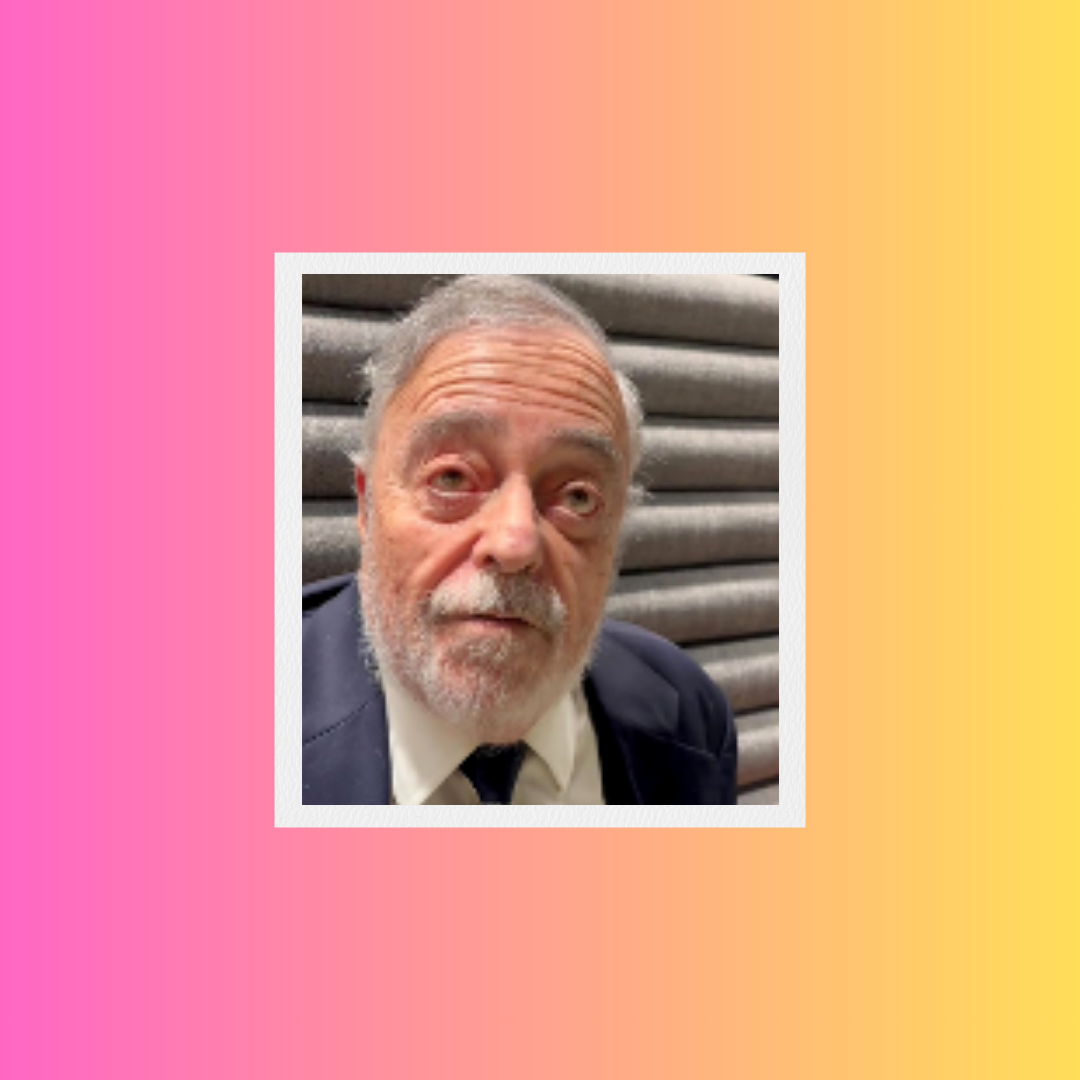
When ECNV staff attended an advance screening of Being Heumann, hosted by the World Institute on Disability, we invited Peter Coppelman to join us. For Peter, the film was more than a portrayal of disability rights history. He had lived it.
In 1977, Peter served as chief counsel to disabled demonstrators occupying the federal building in San Francisco. They demanded that the federal government implement Section 504 of the Rehabilitation Act without weakening its protections. Their action became a landmark in the disability rights movement.
For those of us who knew Judy Heumann, the screening also brought memories of a remarkable friend and leader whose example continues to guide our work. Afterward, I interviewed Peter about his experiences and memories of Judy. “Oh Judy was great,” he recalled. “She and Ed Roberts were probably my favorite clients, and I’ve had a lot of clients.” Reflecting on his long public-interest legal career, Peter told me, “My presentation to Alan Cranston is the single high point of my career.” Peter also shared his written recollection of April 1977. We are honored to share his account in his own words.
Disability Revolution 1977
By Peter Coppelman
THE SETTING: It was April of 1977. At issue were regulations implementing Section 504 of the Rehabilitation Act, the “Civil Rights Act for the Disabled.” The statute barred discrimination against the disabled in any federal program or any program receiving federal funds. Decision time on the regulations had come. Would the regulations be strong, as proposed by the previous Administration, or weakened as the current Administration desired? The decision was up to Health, Education, and Welfare Secretary Joseph Califano.
THE TAKEOVER: The disability community was understandably wary of the Administration’s intentions. So, in an act completely without precedent in American history, on April 5, 1977 disabled demonstrators took over ten federal office buildings nationwide. Their battle cry was “Sign 504;” that is, sign the earlier, stronger version of the regulations without any changes. All of the occupations collapsed within a day or two, leaving only the San Francisco one alive. There 150 demonstrators settled in to live in the federal building. They would remain for twenty-six days! Food was provided by the Black Panther Party, Glide Memorial Church, and others. I was their lawyer.
THE D.C. CONTINGENT: The demonstrators gained the support of Governor Jerry Brown and several Congressmen, two of whom even held a Congressional hearing in the building. But, frustrated by Regional HEW officials’ ignorance and indifference, the demonstrators decided to send a 34-person contingent to Washington, D.C. to meet with the federal officials making the decision. They were supported by the International Association of Machinists, who paid the plane fare for thirty-four people, rented a truck to drive around the demonstrators - most in wheelchairs - and arranged for lodging in Luther Place Memorial Church. Upon landing in D.C., they went straight to Secretary Califano’s house for an all night candle-light vigil. The Secretary did not appear.
THE D.C. MEETINGS: The next day a subset of the demonstrators met with influential California Senator Alan Cranston. Cranston began the meeting by parroting the Administration’s position that numerous provisions in the regulations might have to be changed. Many demonstrators spoke from the heart. When it was my turn, I said that the demonstrators had put their broken bodies on the line. For the first time in their lives they saw a chance to go from separate and unequal, beyond separate and equal, to integrated and equal. After all they had endured, they were dismayed and disheartened to hear Senator Cranston mimic the Administration’s line. Now they were out of options. They were begging for his help. When I finished, everyone was in tears. On the way out of the meeting one of the other lawyers said to me: “A million bucks couldn’t have bought the representation you gave those people in there.” Later that day Senator Cranston did a 180, sending a strong letter to the White House supporting the position of the demonstrators.
THE DENOUEMENT: The next day the demonstrators met with White House officials Stu Eizenstat and Bert Carp. When one of the wheelchair people needed to go to the bathroom, he had to go next door. There was no accessible bathroom in the White House! Saturday night the demonstrators returned to Secretary Califano’s house for another vigil. Once again they had no contact with the Secretary. On Tuesday they held a rally in front of the White House. Numerous sympathetic rallies were held across the country. On Thursday, Secretary Califano signed the strong version of the regulations with no changes. Total victory! The dedication, sacrifice, determination, persistence, and courage of the demonstrators prevailed! Today millions of disabled people everywhere in the country every day are the beneficiaries of accessible buildings, accessible public restrooms, accessible public transportation systems, and many accessible programs receiving federal funding.
Judy’s Legacy: The Work Continues
Closing reflections by Cherie Takemoto
Reading Peter’s recollection reminds me how much we owe to Judy Heumann and the disability rights pioneers who refused to accept exclusion as inevitable. Their victories were not simply about accommodations or services. They challenged systems of power and insisted that disabled people have the same rights, opportunities, and choices as everyone else.
Judy’s friendship, leadership, and commitment to those most marginalized profoundly influenced my own advocacy journey. I was deeply honored to receive the Judy Heumann Advocacy Award from the National Council on Independent Living this July. The recognition also carries a responsibility to continue the work she championed.
At ECNV, that means moving beyond helping individuals overcome barriers to changing the systems that create them. We build community leadership and solidarity, particularly alongside disabled people whose lives intersect with racism, poverty, immigration barriers, and other forms of exclusion.
The 1977 Section 504 victory reminds us that meaningful change happens when disabled people organize around shared demands and insist on shaping decisions that affect their lives. Peter’s recollection illustrates a fundamental principle of disability justice: the people most affected by injustice must lead the movement to change it.
Nearly 50 years later, “Nothing About Us Without Us” remains the battle cry of Centers for Independent Living and a guiding principle for ECNV. Judy’s legacy is not simply something to celebrate. It is a call to action—to build collective power, challenge the systems that perpetuate exclusion, and advance the liberation of all disabled people.
Watch the full interview: Peter Coppelman recounts the Section 504 protests, the meeting with Senator Alan Cranston, and his memories of Judy Heumann.
About Peter Coppelman
Peter Coppelman is a public interest lawyer whose career has spanned disability rights, economic justice, environmental protection, and reproductive rights. A graduate of Harvard College and Cornell Law School, he trained and supervised the Disabled Paralegal Advocacy Program at Berkeley’s Center for Independent Living and served as chief counsel to demonstrators in the 1977 San Francisco Section 504 occupation. He later served as vice president of The Wilderness Society, Principal Deputy Assistant Attorney General for Environment and Natural Resources during the Clinton administration, and general counsel of the National Abortion Federation. In retirement, he has published two volumes of poetry titled A Life of Service.